Monday, February 19, 2024


Part 1: Iditarod Trailbreak Pre-trip 2024

ITC (Iditarod Trail Committee)

MISSION STATEMENT

To promote, sponsor and sustain the world premier sled dog race along the Iditarod Trail, which incorporates traditional wilderness mushing skills, mandates the humane treatment of dogs, reflects the human wonder and challenge of Alaska’s wilderness, contributes to the historic, social, economic and cultural fabric of Alaska, and preserves the historic contribution and contemporary practice of dog mushing.


                                   My rig parked at the Dalzell cabin
     The shop door closed after the last of six snowmachines rolled out of Allen’s shop. We were on the Pre-trip with a specific mission. Allen’s shop is located on the shores of Big Lake and serves as home-base for snowmachine rigging and maintenance.
     I zipped my coat, slid my goggles down into position and headed onto the lake along with the others. Jerney and Cameron were dragging long siglin sleds with gear and fuel, Allan was pulling a giant groomer (...named Tyrone). Spencer, Kody, and I were bobtailers, a trucker’s term for driving a large rig with nothing in-tow behind. “Let’s Roll!”
     The Iditarod (ITC) owns and maintains 14 snowmachines. Six are for the trailbreakers (us), four are for the trail sweeps, and the other four are for the Iditarod Insiders (Media)
     Specifically they are Skidoo expedition LE 24 inch wide tracks with 900 ace four stroke motors. Each sled is outfitted with specific modifications for the mission at-hand. Aftermarket high output LED cube lights on the front, Electric hot-pot cookers under the cowling, aluminum racks with an angled box for trail stakes (lath), brackets and latches for shovels, axes, and long handled pruning shears.
     Each year four of them are sold and replaced with new ones. Each sled makes three trips to Nome before being sold. On a journey of over 1000 miles it’s prudent to have new sleds that won’t break down.
     As we zipped down the lake, I tried to take-in all of the sights and activity going on around me. Big lake in the winter is a web of ice roads and snowmachine trails. The shores of the lake and several islands are overcome with large homes, shops, and docks. We passed several groups ice fishing along the way. One guy was fishing off of the tailgate of his truck!
     Ten miles down the trail my sled started sputtering, surging, and backfiring. “Damn!” I thought.
     “It’s the sock filter” said Spencer. Apparently I was driving one of the sleds that missed the fuel-filter change party.


                                         Soiled filter (top) vs. new filter (bottom)

     Allen and I turned around, back to the shop to swap out the dirty filter. Allen competed in the Iron dog snowmachine race several years ago and is a whiz with a wrench. What would have taken me over an hour was done in half that time and before too long we were back on the trail, racing to catch up. I felt like I too was racing the Iron dog just trying to keep up with Allen.
     The rest of the crew had continued down the trail, crossing the Susitna River and then up the Yentna. Eventually we caught up to them (coincidentally) very near Indian Creek where our families cabins are located. It felt weird for me to pass the turn-off, having spent so much of my life in that area. 
     We stopped to fuel up and grab a beer at the Skwentna Roadhouse. Owner Cindi Herman is super friendly and has her finger on the pulse of what is going on up and down the trail at any given time. “Finger lake got two feet of snow yesterday”, she told us.
     Sure enough, further up the trail the snow started to get deep. It was 30 degrees and the new snow was the consistency of mashed potatoes. It was still snowing and the wind was howling at 20 miles per hour. The groomer Allen was dragging needed several snowmachines in front of him to continue forward progress. Visibility was low and whoever was in the front at the time had snow piling over the cowling as they plowed to the next marker. Several of us have GPS devices mounted to our dash which was essential for finding our way in the low visibility. Finally after a long day of bashing through the mashed potato snow (w/o gravy) through sideways wind, we pushed across Finger lake and then to Winterlake Lodge where we would stay the night.
     Spencer had flown a barrel stove up to the lodge a few days prior so we knew the old log cabin would be warm this year. Each year we stay in the original log cabin. It has plenty of beds but is super drafty, has no lights, and an under-powered wood stove.
                                   Original log cabin at Finger lake. Snow anyone?

     The barrel stove was an awesome upgrade and before too long we had our wet gear hung on nails and hooks. I knew the next day would be a long work day; Nobody wants to start out the day with wet gear.
     The next morning we started by packing a giant dog-lot on the lake in front of the lodge the size of a softball field. Finger Lake is an official checkpoint for the Iditarod and all the teams need a packed down area to park their teams as they check-in and care for their dogs.
     “Whoa, look at that”, Kody said. The lake next to our new dog lot was littered with hundreds of snowballs ranging in size from tennis ball to volleyball size. The wind had blown so hard last night, and the snow was so heavy and wet that it created the perfect storm for rolling natural-made snowballs from the chunks of snow blown off of the trees. “I’ve never seen that”, he said.
Natural snowballs. Photo by Kody Dubie

     As predicted the rest of the day was lots of work including deep snow trail breaking and cutting over 70 trees out of the trail.
     The spruce bark beetle epidemic has decimated the white spruce population on the South side of the Alaska Range; All but the youngest of spruce trees across a giant swath of Southcentral Alaska are now dead. Even a modest wind storm will knock a bunch across the trail.
     The wind was blowing again all day and at one point while cutting a tree out of the trail, the army of dead spruce towering over us started swaying and cracking. “Leave this one!” Spencer shouted over the wind. “Too dangerous.” I passed the message onto Kody behind me. Later Kody told us that right after we all moved-on they witnessed a big one crash down behind them.
     Additionally, I found out later that after we had passed through the area, another six trees had fallen over the trail behind us. By the time we would return this way several days later, that number would be closer to twelve.

Before shot of crew cutting a sidehill
down to the Happy River. Photo by
Spencer Pape


After shot of safe trail. Photo by Spencer Pape


Allen bucking up free firewood. Photo by Spencer Pape


Hey that's me! Photo by Spencer Pape


LED light cubes are nice at night. Photo by Spencer Pape


Photo by Spencer Pape

     We stayed the night in the graces of the Perrins’ family Rainy Pass Lodge located on the shores of Puntilla Lake. They had dinner and breakfast for us the next morning before we fueled up and left. Our plan was to push up and over Rainy Pass and start work on our biggest obstacle, the Dalzell Gorge.

Steve Perrins and his daughter swung by to chat
while I was fueling up.

Two red foxes bickering around camp at Rainy Pass Lodge.


Above treeline near Rainy Pass.

     A few miles out of Puntilla took us above treeline and we were rewarded with spectacular views in all directions. We found the trail easily and pushed up and over Rainy Pass itself. It was obvious that the area had seen lots of wind action too because most of the snow had blown off the mountains leaving some of them barren and brown. Luckily for us a lot of that snow had settled into the steep cut down Pass Creek. What took us several hours last year (Cutting brush, shoveling sidehills, building bridges ect.) took us through the area in less than 45 minutes. Several of us missed shots at ptarmigan while passing through this area. Soon we would arrive at the Dalzell cabin.

Dalzell cabin. photo by Kody Dubie


The Crew fully assembled at the Dalzell Cabin

     From here we would work up and down the valley putting in the trail and cutting brush. Dalzell Creek had frozen over nicely and was in stark contrast to last year.

Once again what took us almost a full day of work last year turned out to be closer to a half of a day. Before long we were all parked on the Tatina River near where Dalzell Creek washes in.

Natural ice bridge over Dalzell Creek.

     The four miles down river to Rohn was covered in glare ice from shore-to-shore.

Our sleds all have studded tracks that grip the ice nicely. Soon we arrived at the checkpoint that many consider to be the most beautiful of all; Rohn.


Jerney and Jalen having fun on the Tatina

     Rohn is on the National Historic Registry of Famous Places and is a lone log cabin and official checkpoint of the Iditarod; No one lives there. It is situated near the confluence of the South Fork of the Kuskokwim and Tatina Rivers and is surrounded by tall glorious mountains. Originally constructed in the 1930’s, it has been used by gold rushers, pilots, trappers, mail-carriers and mushers alike.
     After packing down the airstrip next to the cabin we took a long break enjoying the views overlooking the South Fork of the Kuskokwim River. “I’ve always wanted to pee in the Kuskokwim”, I announced mid-stream.

Me on the far left crushing the bucket list


     This would be the furthest we would go on this trip. In a few weeks we will be back repairing any trail damage that might have occurred and then we will push up the Iditarod trail for more of the same. At that point we will try to stay 24 hours ahead of the leaders on our way to Nome.
     There is no doubt that we have a lot of fun along the way but we all take our job as Iditarod trailbreakers seriously. Each of us has an intimate connection to the Iditarod and we all want to create trail conditions that are ideal for all of the teams. The Iditarod trail cuts through some wild country including lots of creek crossings, overflow, sidehills, and deadfalls; I believe that our work is essential to ensure the safety of all 40 mushers and over 600 sled dogs.
     Often we marvel and comment on what it must have been like in the infancy of the Iditarod but it often leaves me with more questions than answers: The first Iditarod was in 1973. The snowmachines back in the early 70’s are but a shadow of what we ride today and in my wildest imagination can’t image these vintage sleds making it out of a parking lot let-alone over the Alaska Range and beyond.
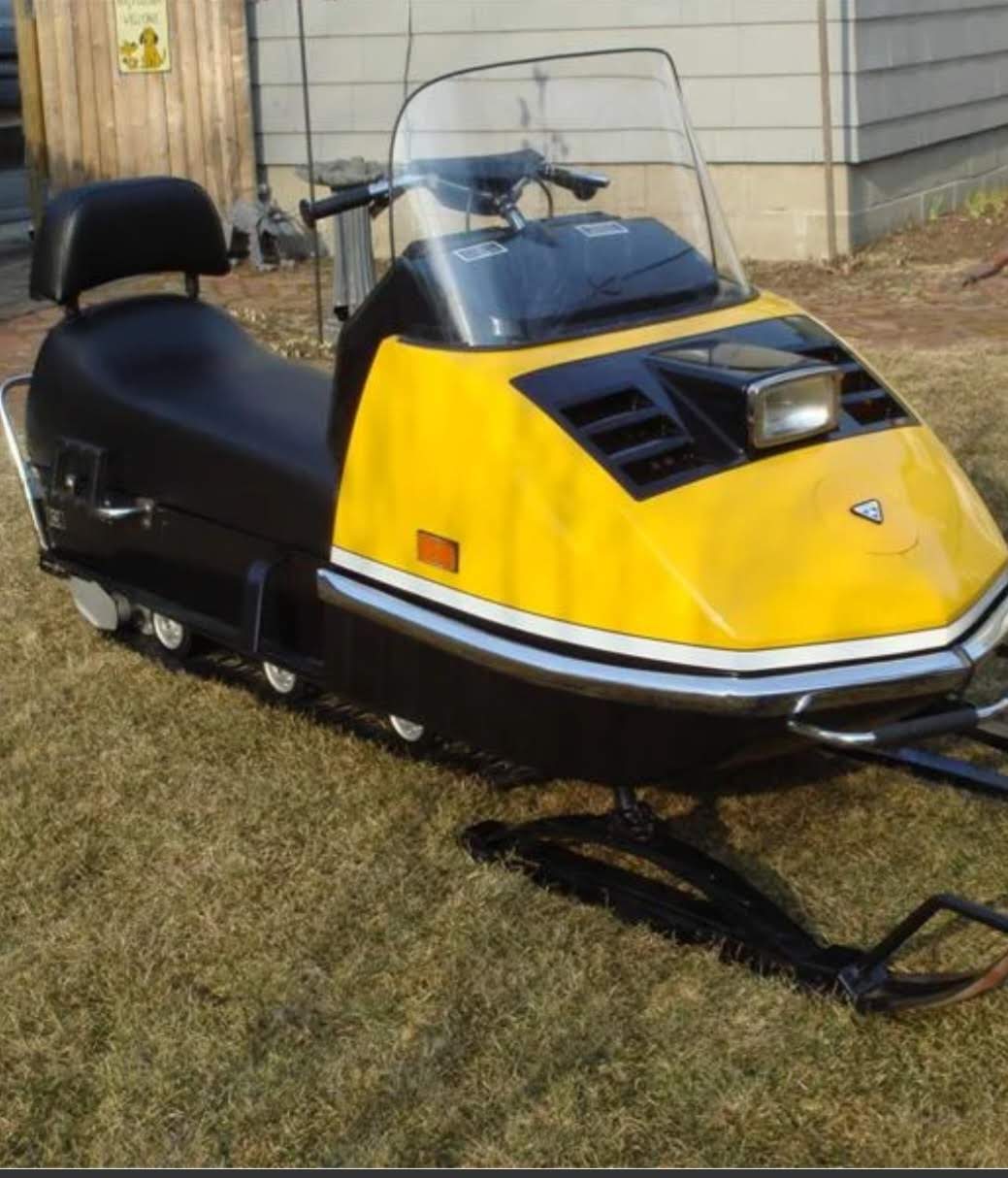
1973 SkiDoo Olympique...All the way to Nome!

     What manner of trailbreaking was done to help these early Iditarod mushers? Maybe they were mostly on their own? Did the mushers have to pack their own trails with snowshoes ahead of the team. As my journey unfolds, I hope to learn more about the history and communities along the way. I feel honored to be a part of something so rich in Alaskan culture as the Iditarod.
     The rest of the trip we would make our way back the way we had come, snipping brush a little, shoveling in some holes a bit, but mostly enjoying the camaraderie and breath-taking scenery of the Alaska Range. I can’t wait to go back.


Saturday, February 17, 2024

"All the way to Nome!"-Prelude

 “All the way to Nome!”

-Bill Starr (former Anchorage Assemblyman)


     “Hey there Spencer”.  The phone call caught me by surprise.  After some small talk he dropped the question:

     “So what are you doing on February 29th through the 12th?” My heart skipped a beat.   I knew exactly where this conversation was going and I was super excited. “Eric has to drop out, he’s having surgery.  Do you want to go to Nome with us?”

     After initially fumbling over my words, I couldn’t say yes fast enough.  We went over a few details before hanging up, setting into motion a trip I have wanted to do for a very long time.

     Last year I was able to join the Iditarod trail breakers for the “Pre-trip”.  Over the course of a week we made our way from Big Lake to Rainy Pass, down the Dalzell Gorge and all the way to Rohn.  We broke the trail, brushed it out, and built 32 bridges over all of the open creeks.

The Iditarod Trail Breaking crew taking a break at Rainy Pass.


     Along the way we would stay at Winterlake lodge (Finger Lake), Rainy Pass Lodge (Puntilla lake), and a cabin located strategically at the top of the Dalzell gorge.  This year I would get to go on both trips taking me (eventually) to the end of the Iditarod trail...Nome!

     The Iditarod trail sled dog race has been a big part of my life since I was a kid.  Our close family friend Jim Lanier is a musher that has completed many Iditarod races.  Our two families started a fledgling setnet salmon operation in Northern Cook Inlet back in the mid 80’s.  Our families have been close and we have followed and supported Jim Lanier’s Northern Whites Kennels ever since.  

      Our cabin on the Yentna River is right next door to Jim’s cabin.  Each year we host an Iditarod celebration on the river.  We build an igloo style snow-wall and give away hotdogs to the mushers as they pass-by.  This has been a family tradition for over twenty years.  By the time the racers reach our spot on the Yentna it is 60 miles into the race and the mushers are hungry.  They have come to expect our hotdog offerings.  In recent years over 90 percent of the mushers have taken hotdogs from us. One of our enthusiastic friends Bill Starr has become notorious for howling out the phrase “All the way to Nome!”, as the mushers pass.  This, I think, is my new mantra.  


Tuesday, November 7, 2023

An Afternoon in Tattooine

       An Afternoon in Tattooine

     On a recent trip to Tattooine I ran into a friendly and rather cute Jawa;  The Force was with her.

       “Teedee tee dee!” She said. Translation:  Follow me to the Cantina.    


     Often my new Jawa friend would stop to scout for Sandpeople;  They always travel single-file to hide their numbers. 


I think she likes me.

      You will never find a more wretched hive of scum and villainy than at the cantina in Mos Eisley, but they serve a nice IPA. “We must be cautious” I thought.

    There was a lot of work to do with the rebellion battling the evil Empire but for now I would be content to knock back a few with my new friend. “Teedee tee dee”  She said.  Translation beer is good.
You can never let your guard down
in a place like Mos Eisley.

Tuesday, October 17, 2023


 Of Honker Doubles and Retirement

“Often when you think you are at the end of something, you're at the beginning of something else”-Fred Rogers.

Full moon over the Tordrillo 
mountain range.

Ten Canadian geese breezed by me just out of range.  “Darn”.  I was hunkered behind a large cottonwood drift-log hoping for some action.  The morning had been a calamity of missteps summed up by the phrase wrong place, wrong time.  It was as if the geese were toying with me by flying just out of range or (my favorite) flying directly over the spot I had just left.  

My hiding spot.

     I watched as they set their wings and landed safely out of reach on the other side of Ivan River.  Now there were over 200 of them waddling around on the mud flats;  I think they were snickering at me.

     After waiting as long as I could, I decided to come out of hiding from behind the log; I couldn’t stand it anymore.  I decided to flush them up.  Maybe some of them would head in my Dads direction.  I stood up and started walking directly toward them.   I was able to make it onto the muddy bank right across the river from them.  Finally they started to squawk and honk and before long they had all taken flight in a big noisy frenzy.  

       Imagine my surprise when a group of 15 got confused and decided to fly right over the top of me.  I missed the first shot but the next two connected, sending two nice Canadians to the ground; Honker double!

     Retirement; What fun!  26 years of teaching and coaching was enough for me and I was ready.  I hadn’t been able to afford the time-off to join Dad waterfowl hunting while I was working but this year was different.  “I’m so glad you could make it.” He told me.  Dad was as happy as I was.  

     My Dad, Mom, and I had pushed off of the silty bank at Deshka Landing on the 27th of September and began our journey down-river to the mouth of the Susitna River, into Cook Inlet and then to Ivan River.  Our cabin on Ivan has been the base of our setnet salmon fishing operation for the last 36 years.

       Dad’s new 18 foot Woolridge was dialed-in.  The sun was shining high in the sky and it was a glorious day. We arrived at the cabin at high tide to unload.   We would spend the next five days hunting, cooking, plucking birds and enjoying everything the late fall had to offer.  

     We had a great time no doubt,  but it wasn’t all honker-doubles and rays-of-sunshine by any stretch.  I realized early in the trip how out-of-practice I was with a shotgun and missed so many more than I hit.   In-the-end I would collect more shoulder bruises than birds.  Luckily my Dad knocked down a couple nice geese and we got some ducks too.  

     “STEVE!” It was early on day four and Mom appeared in the distance.  I could sense the urgency.  Dad and I had set out early with headlamps to get in position for first light hunting.  

      “Why was mom out here?”, I wondered.  I grabbed my pack and headed her way.  The tide was cresting 32 feet that morning and the whole place was wet.  I almost went over my chest waders negotiating a slough.

        “A log got the boat!”, she shouted.  She was still 75 yards from me and once she saw that I was on my way she quickly turned her heels back the way she’d come. 

      Ivan River is a tidal slough and is a collection-zone for all manner of Susitna River driftwood.  Everything from cottonwood bark, branches of every size, and even entire trees come floating down the river.  This year’s heavy rains and near flooding conditions have flushed the Susitna basin of massive amounts of drift. Occasionally a log sweeps into our anchored boat dragging it up or down river (depending on the stage of the tide).

     I wanted to catch up to her for some details of the boat situation on the way back to camp but she was hustling with a definitive  hop-in-her-step.  I thought that I would catch her soon but I realized that I wasn’t gaining; She was on fire!  I picked up my pace to almost a jog and finally caught up to her after a quarter mile of chase.  “Jesus mom, I had a hard time catching you!”.  She giggled.  She’ll be 80 in February. 

     Sure enough a monster 70 foot cottonwood tree had dislodged the boat’s anchor and took it for a ride.  The behemoth log took the boat upriver to the corner before it rotated off and continued its wayward journey.  It’s always a little disheartening to look out the window of the cabin to discover that the boat is gone.  

The boat resting on the corner at sunrise
after going on a "ghost ride".

But all's well that ends well and I launched our rubber raft and retrieved the boat soon thereafter.  That night Dad made his famous sweet-and-sour duck recipe and later we sipped Creme de menthe by the wood stove.  We would leave the next morning but for now we would stay up late and swap old stories of Ivan River lore.

Full moon over Mt. Spurr
Dad plucking a goose
on the back deck.

Mom stripping a net in the front yard.
Lots of new drift including several
Iditarod trail stakes that washed 
down the river in the Spring.
Rendered goose fat.   


31 foot tide pushing drift 
onto our boardwalk.

Tuesday, October 10, 2023

Jump Shooting for Moose on the Yukon

Jump Shooting for Moose on the Yukon
(photo by Bryan Kirby)

     The canoe wobbled a little as I stepped in; I was the middle man of three in a 17 foot Coleman canoe which meant that I got to sit on the center crossbar.  Dave was in the back and was alternating canoe strokes with bull moose grunt calls.  Bryan was in the front.
      It had been a long day of travel on the Yukon River.  We had pushed off of the bank at the Yukon River bridge on the Haul Road at 7:00 AM that morning.  An hour stop in Galena had us at 12 hours of river running.
     After we left Galena we decided to stay at Dave’s cabin.  It was only thirty miles further and would break up an otherwise epic boat ride to moose camp.  Also, we wouldn’t have to set up camp.  “The question is..” Dave had said, “What happens if we see a bull at the cabin?” Bryan said nothing.  I was the newbie on this hunt and was trying not to call-the-shots.  After a pause, they both turned to me for an answer.  I was the only one with a rifle and was somehow designated shooter on this hunt.  Bryan and I have moose hunted together many times and neither of us cares who shoots the moose as long as the deed is done.  
     “Well if you’re asking me I would say that if it’s a small one we pass but I’m going to be honest with you.  I have a hard time passing up a nice moose”.  This ended the discussion and we made our way down river.  Next stop Dave’s cabin.
     Dave’s cabin was on an oxbow lake off of the main creek and as we paddled around the corner several ducks swerved in front of us. Dave let out another guttural bull grunt through his fiberglass moose call.
    “Did you hear that?” Bryan said” There’s one over there!”  A call just like what Dave had produced had me reaching for my rifle. It sounded very near.  The paddling had stopped and we slowly glided along the glassy water. 
    Just then an abrupt commotion with branches breaking, had a rather large bull charging out of the brush onto the bank right in front of us not forty feet away!  Dave’s challenge had been answered.  He was swaying his antlers back and forth as he stepped towards us.  I looked behind me at Dave for any indication of where he stood on the situation...nothing.  I turned around to look at Bryan and he was looking at the moose and had his fingers in his ears.  Now either Bryan was trying to dig out some late-fall mosquitos that had flown into both of his ears simultaneously, or he was protecting himself from a very loud noise.  This was all I needed.
       After a brief and intense stare-down, the bull turned his head just enough for me to place a bullet high on his neck.  He went down like a sack of potatoes.  In recent years I have been a bit more selective in my shooting.  When possible, a head or high neck shot is preferred because there is less waste.
       Bryan and Dave looked at each other and just shook their heads in disbelief.  It was 8:00 PM and the sun was going down.  We had several hours of late night work ahead of us but I couldn’t help but feel the excitement of harvesting what would be a big, fat moose that would fill the freezer for the next year! 
     I was a little leary that my hunting partners might dump me into the creek after shooting this moose so late in the day and/or early in the hunt but in the end they were super gracious and we soon got busy with the job of cutting it up .  The process of field dressing the moose would have us done at 12:30 at night but the cabin was only 75 yards away.  We paddled to Dave’s cozy cabin under a sky full of bright stars.  With a grateful heart and tired body, I crawled into my bunk and went to sleep.
47 inch antlers.  Not a monster by Yukon
standards but it was on of the fattiest
bulls I've ever harvested (photo by Bryan Kirby)

     
.


Whole moose in one canoe towed 
behind the "people"canoe.

Corned Moose 23.  Thanks for the
Idea Dave!


Friday, October 6, 2023

Lucky

 Lucky


     “This could be bad ” I thought. All six tires of Dad’s wheeler were completely submerged in mud.  I had broken the winch rope twice and now I couldn’t find the metal hook.  This was the seventh time I’d completely buried the Polaris Big Boss on my way to hunt caribou.  I realized that I was not very close to the area I wanted to hunt. “Maybe I should retreat”.

     Then I saw it; At the base of the small birch tree that was my anchor point I spotted something yellow.  Barely visible, I reached down and grabbed a small section of a broken ratchet strap.  I wondered if someone else got stuck here.  The webbing was weathered and torn but still attached to the black metal hook that would be my savior.  I cut off the webbing and tied the hook to my winch rope.  

     This was perhaps the crux-move of the trip as I was able to extract the wheeler and continue past the rain-soaked swamps and into the high country. 

     It was a relief to crawl out of the swamps onto a dry trail.  Before too long I was above the treeline and the valley presented itself to me in all its glory.  I followed the trail up the valley past a small lake that my friends have a cabin on.   The trail meandered up a steep hill with some tricky boulders to negotiate.  I planned to glass for animals at the top but I didn’t realize that I wouldn’t be alone.

       I quickly shut-off the wheeler and stared straight ahead in absolute awe.  I tried not to move or breathe because right in front of me, no further than 50 yards was a large bull caribou. It was the day before opening day for my hunt; I named him Lucky.

Lucky

     Lucky seemed to be just as interested in me and I was of him.  He decided to hang out with me for 30 minutes or so.  He would graze on the short grasses and then look up and watch me.  I decided to set up my camp; This seemed like a good spot to me.

     Lucky watched me set up my teepee tent and unload my gear.  He wasn’t sure what to make of me so he came closer.  From inside the tent I peered through the zippered rain fly to see that Lucky was just 40 feet away!  

     Eventually after making a complete circle around me and my camp, Lucky disappeared over the hill.  I realized that it was highly unlikely that he would be around in the morning but I was encouraged to know that there were caribou around.  I enjoyed the evening camped out on a high point with glorious vistas.

Thanks for the wheeler Dad!

I'm a hot tent guy these days.  Love the wood heat.

    I had drawn a DC 590 caribou tag for the Talkeetna mountains.  I was one of 200 tag-winners out of the 5,839 total that applied; That’s a 3.4% chance. In the information section of the ADFG draw supplement for DC 590 it states:  “The caribou in this hunt tend to be in the areas only accessible by aircraft”.  I knew I was taking a chance with my choice of access but what can I say....I’m cheap.

     The next morning I stepped out of the tent into some of the thickest fog ever.  I felt like I was trapped inside a ping-pong ball.  I wandered no further than 50 feet from the tent before losing sight of my camp.  I returned and decided to wait-it-out.  

     Finally, the fog began breaking up the valley so I grabbed my gear and set out on foot quickly losing sight of my camp.  I hiked a couple of miles up the valley stopping to glass as the lifting fog revealed new areas;  No caribou.  I decided to return to camp, pack-up, and ride further down the trail to find some new areas.

     As I got closer to camp I realized that it would be a good idea to get a good look over all sides of the hill I was camped on.  The fog was gone now and I should leave no-stones-unturned.  

    Imagine my surprise when I looked over the first hill to find my new friend facing me behind a rock outcropping not 50 yards away.  He hadn’t seen me yet because his head was hidden by the rocks.  His big rack was giving him away.  Slowly I stood up poised to shoot.  He looked at me for what seemed like an eternity, then he turned his head just enough.  It was then that I realized that I had given the nickname Lucky to the wrong one of us.


Euro mount


All of the jars of caribou gets a small chunk of back fat 
Half of the jars get a tablespoon of yellow curry. 

Sunday, August 7, 2022

Salmon Love

                                                         Salmon Love

Harrison Bay


     The gift was an unusual one by anyone’s standards.  Our setnet season was wrapping-up and several of our customers were picking up coolers of fresh-caught Cook Inlet salmon.  We have been direct-marketing our salmon for the last twenty years and manage to sell our entire catch to locals out of our driveway. 

      “Here you go, give these a try”.  I overheard our neighbor Richard who was picking up an order of fish and had given us, what would turn out to be, a real treat.  Tamra thanked him,set the bag down on the table, and got back to work. 

     I was busy sliding fish out of the boat into a fish tote filled with ice, Tamra was hustling around weighing fish, calculating totals and answering phone calls.  My Mom and Dad were scrubbing coolers and shuffling fish into coolers.  Hazelee, my daughter was busy icing fish and helping wherever needed.  

     It wasn’t until later that we would discover what Richard had brought us; Loosely contained in a plastic grocery bag were the carcasses of two sockeye salmon.  Upon further inspection the carcasses were darkened, dried and smoked!

     A few years ago I posted a youtube video entitled “How to filet a salmon”. In the video I point-out that no filet job is perfect. It doesn’t matter how precise your cutting technique is, there is always a small amount of meat left along the spine, tail, or ribs.  My suggestion, in the video, is to scrape the excess meat off of the bone with a tablespoon (great for salmon patties).  

     Smoking the carcass;  What a great Idea! I was blown away. “Why hadn’t I thought of this?”, I wondered. 

      I took one of the smoked carcasses and peeled a small strip from along the ribs.  The dark red meat had to be pulled and tugged from the bone and was the texture of jerky.  The smoky sweet flavor was wonderful! We passed around the dried carcass until it was nothing but bones and fins.  “I gotta try this”, I thought.
I tried it.


Six smoked carcasses.